
This article has been published as part of the Rethinking Curriculum project, kindly funded by The Helen Hamlyn Trust.
Adele Darlington, School Artist-in Residence, Holy Trinity Church of England Primary Academy, Handsworth, Birmingham
Context
Holy Trinity Church of England Primary Academy is a one-form entry school serving the diverse community of Handsworth, Birmingham. The school gates, surrounding streets, local shopping centres, businesses and places of worship are characterised by a vast mix of religious and cultural traditions. With more than 32 languages spoken across the school community, this rich diversityThe recognition of individual differences in terms of race, ethnicity, gender, sexual orientation, socio-economic status, physical ability, religious beliefs and other differences is one of Holy Trinity’s greatest strengths and underpins the inclusive ethos that runs through every aspect of school life.
The school has a strong commitment to nurturing high aspirations amongst all of its pupils, striving to excite and inspire every child on roll to achieve their highest potential. It is also equally committed to creating a strong sense of belonging, ensuring that every pupil feels valued, supported and connected to the school community. Respect, compassion and understanding are encouraged amongst pupils, who are taught to celebrate each other’s, and their own, unique qualities.
Holy Trinity is currently in a period of transition. In September 2025, a new headteacher and five class teachers were appointed. Whilst this period of change has brought with it obvious challenges, it has also created fresh opportunities to establish a new shared vision, design a bespoke curriculum and develop an ambitious culture of high expectations for all.
Curriculum and pedagogical approach
The curriculum drivers at Holy Trinity are informed by the work of both Emily Style (1988) and Dr Rudine Sims Bishop (1990) on windows, mirrors, and sliding glass doors. Both works highlight the importance of pupils seeing themselves and their lived experiences reflected in the curriculum (mirrors), while also seeing and developing an understanding of the lives of others (windows). When carefully planned sequences of learning include meaningful representation and relevant enrichment opportunities, the curriculum can act as both a mirror and a window for all pupils. This nurtures both curiosity and connection, enabling learners to step through sliding glass doors into new worlds of learning as confident, globally aware citizens.
Reimagining the art and design curriculum
This case study focuses on the art and design experiences of pupils across the school during the 2025-2026 academic year. It explores the impact of a newly developed approach to art and design, underpinned by the mirrors, windows, and sliding glass doors analogy. This new curriculum was designed and delivered by the school’s subject specialist, with the aim of enriching creative opportunities, developing pupils’ artistic knowledge and skills, and raising the quality of outcomes for all learners.
Research in primary art and design highlights the importance of a representative curriculum in shaping pupils’ understanding of art and identity. Studies demonstrate that the subject has historically been dominated by Eurocentric narratives, which can limit pupils’ perceptions of what art is and who can be an artist (OfstedThe Office for Standards in Education, Children’s Services and Skills – a non-ministerial department responsible for inspecting and regulating services that care for children and young people, and services providing education and skills, 2023; Holdstock, 2025). Recent guidance from the Researching the arts in primary schools (RAPS) report (2025) and the Visualise: Race and inclusionAn approach where a school aims to ensure that all children are educated together, with support for those who require it to access the full curriculum and contribute to and participate in all aspects of school life in secondary school art education report (2024) emphasises the importance of moving beyond this narrow canon to include a broader range of artists and artistic traditions in curriculum design, ensuring representation is meaningful and relevant.
Holy Trinity’s school community was the key driver in the design of this. Before any units of work were developed, conversations between senior leaders and the art specialist established the needs of the school. Data regarding pupils’ ethnicities, religions and lived experiences was carefully considered to ensure mirrors and windows were included for all. The intention was for pupils to encounter a wide range of artists and artworks from different periods, cultures, and contexts. This exposure to a broad spectrum of artistic voices enables pupils to challenge outdated stereotypes of what art is and what an artist looks like.
The curation of such a curriculum requires significant time and careful consideration. Extensive research was undertaken to identify artists who were both relevant to the school’s cohort and able to support the themes, knowledge and skills identified within each unit of learning. To facilitate this work, dedicated curriculum development time was ring-fenced during the school day for the art specialist.
Artists within the curriculum were carefully selected to provide both familiarity and wider global understanding. Local contemporary artists such as Stuart Jarvis and Hurvin Anderson enable pupils to make direct connections to the artistic landscape within their locality, fostering a sense of belonging. Stuart Jarvis’s charcoal studies of Birmingham’s iconic Spaghetti Junction encourage pupils to look closely at familiar landmarks and consider how drawing can be used to capture the character and structure of an environment. Hurvin Anderson, who was born and raised in Handsworth, provides a particularly meaningful local connection, allowing pupils to engage with the work of an internationally recognised artist whose roots lie within their own community.
Other British artists, including Brianna Lois Parker and Tim Fowler, broaden pupils’ understanding of contemporary artistic practice across the country and support engagement with living artists working in diverse ways. Tim Fowler’s work, which explores his Bajan heritage through the painting of plants and flowers that have followed the same migratory journeys as his ancestors, provides opportunities for pupils to consider themes of identity and cultural heritage. Brianna Lois Parker’s artwork Still Life with Bun and Cheese (2025) is explored alongside Paul Cézanne’s nineteenth-century still-life paintings, enabling pupils to make meaningful comparisons between contemporary and historical approaches to composition and the representation of relevant, everyday objects.
International artists such as Ben Enwonwu, Alma Thomas, Benode Behari Mukherjee and Alexander Calder further extend pupils’ knowledge and understanding of the art world, offering insight into a wide range of cultural contexts, materials, and artistic languages.
Pupils experience art and design lessons weekly throughout the school year to ensure regular retrieval of skills and knowledge and continued progression. Lessons are delivered through high-quality direct instructionA method of instruction in which concepts or skills are taught using explicit teaching techniques, such as demonstrations or lectures, and are practised until fully understood by each student and clear modelling (including live demonstrations using a visualiser, an easel or a pre-recorded video) to support pupils’ acquisition of key techniques and processes. Independent application and exploration take place in sketchbooks before pupils create their own pieces of artwork. Throughout this process, they are encouraged to self-critique, reflect, and refine their work, developing both confidence and an understanding of how artists improve and evolve their practice.
Impact
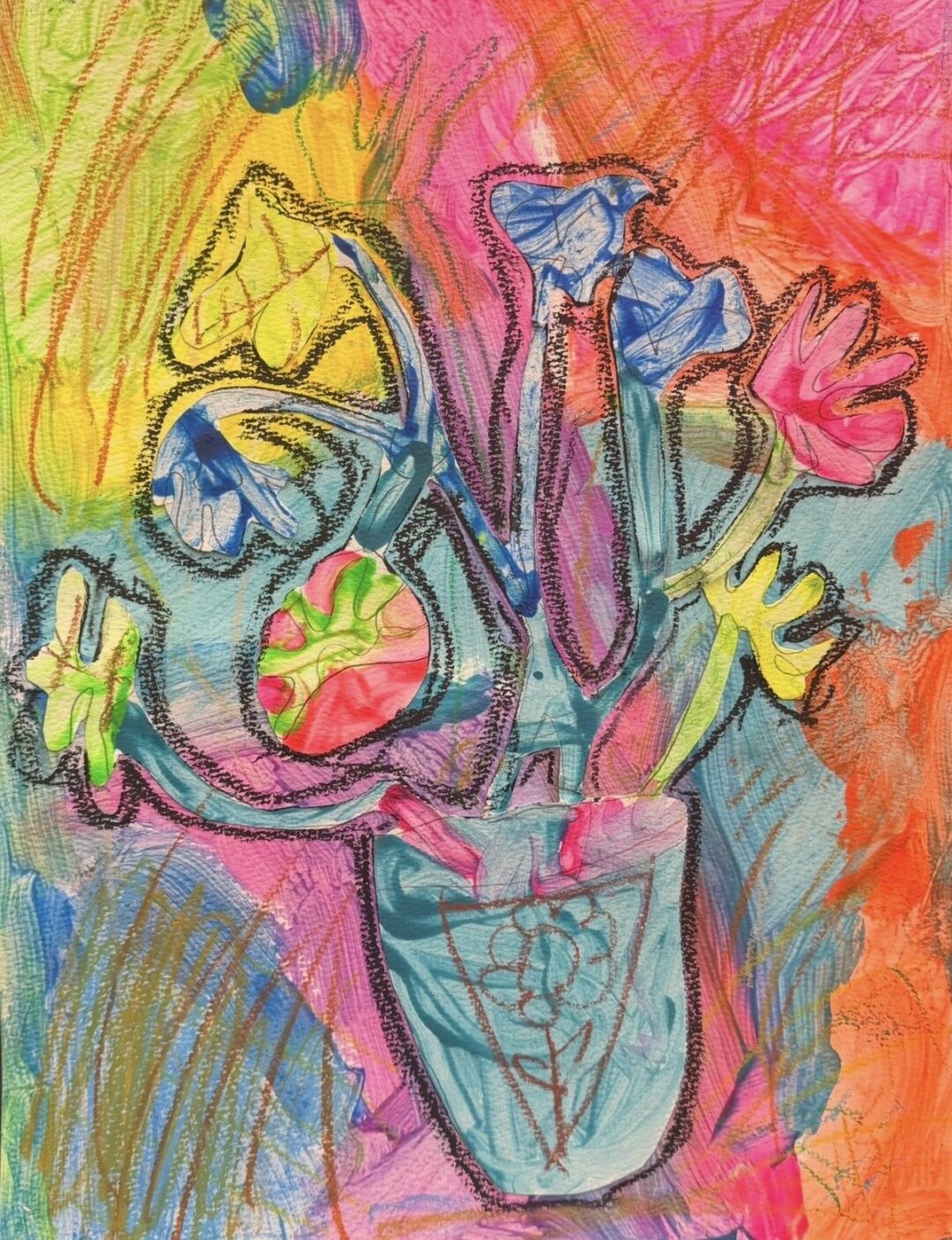
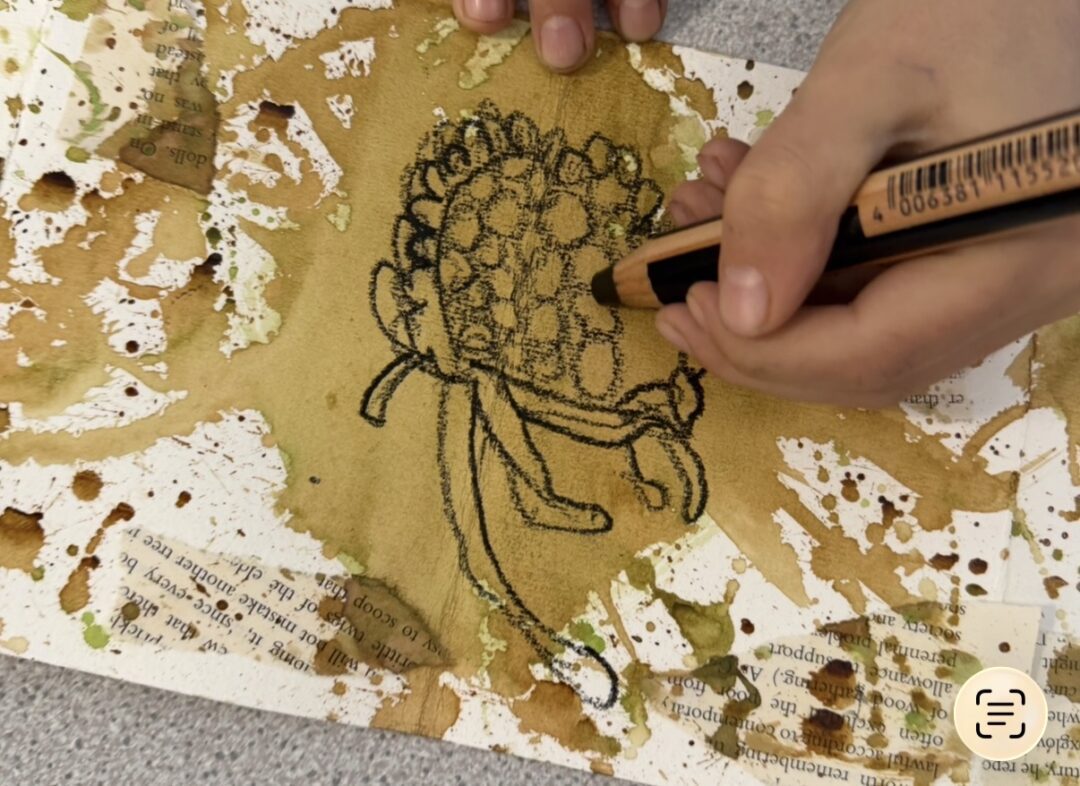
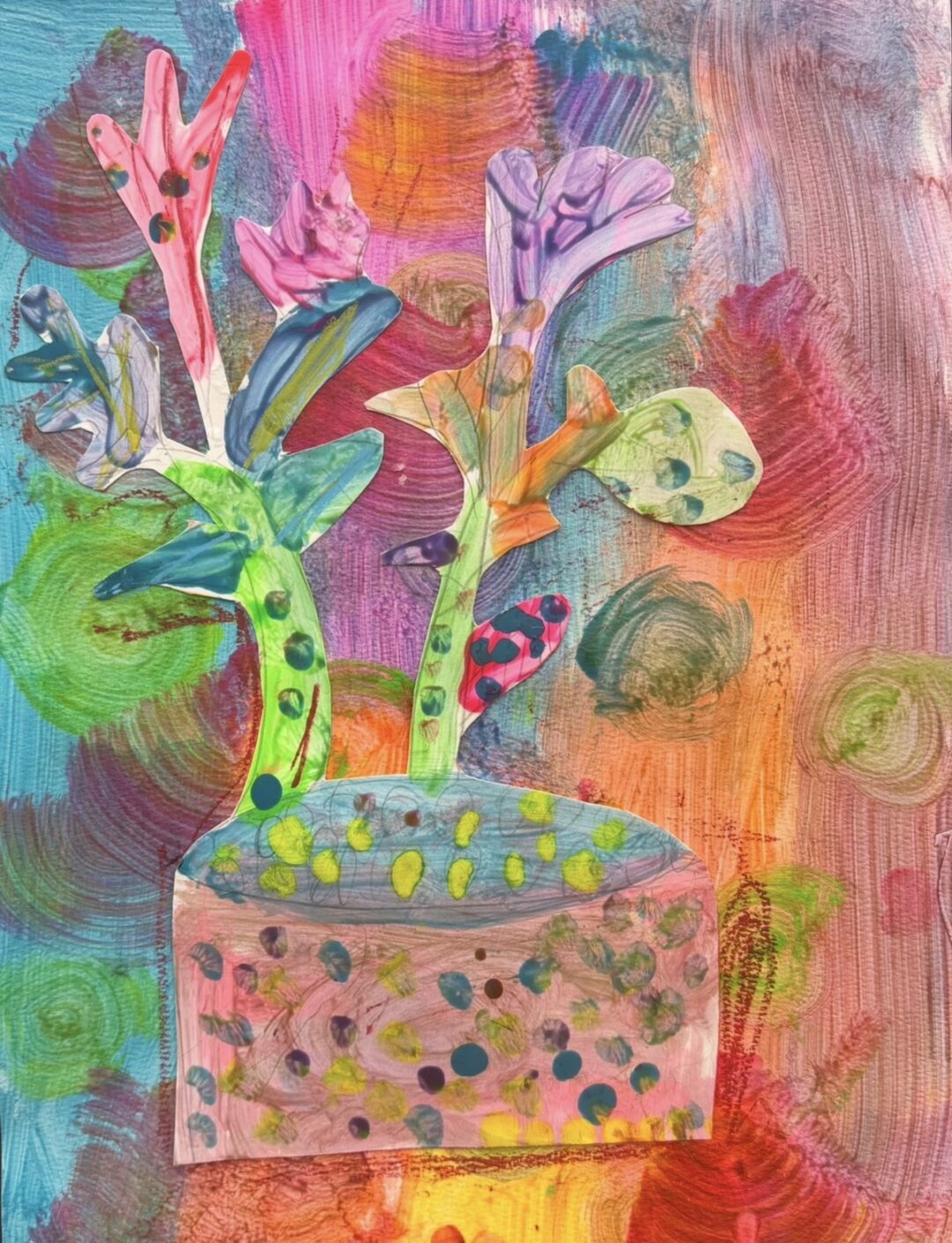
The impact of the curriculum has become evident in a relatively short space of time. Engagement in lessons is high, with pupils carrying out self-motivated research and producing artwork at home, which they eagerly bring in to share and add to their sketchbook research pages. This enthusiasm has been strengthened through first-hand communication with some of the artists studied. For example, as part of the ‘Vibrant Blooms’ sequence of learning, Year 3 pupils received a letter and original artwork from Leicester-based artist Tim Fowler. He praised their mixed-media artworks and encouraged their continued journey as artists. Figure 1 presents examples of work produced by pupils during this learning sequence.
Figure 1: Year 3 pupils work inspired by Tim Fowler’s artwork.
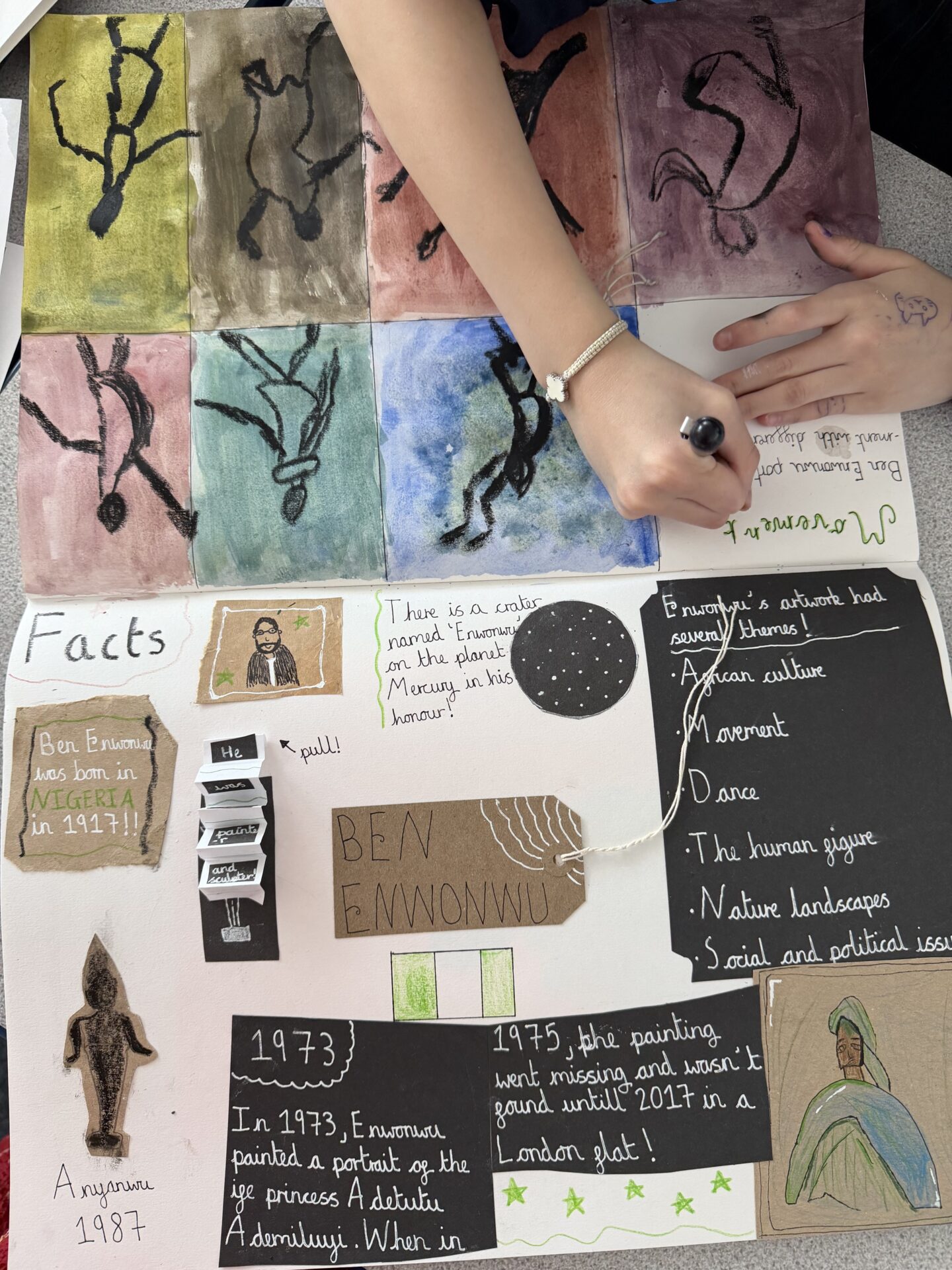
Similarly, Year 6 took part in a Zoom call with artist Oliver Enwonwu, son of pioneering Nigerian artist Ben Enwonwu, during the ‘Enwonwu’s Dancers’ curriculum sequence. During the session, they were shown examples of Oliver’s artwork and taken on a virtual tour of his art studio. The thoughtful and curious questions pupils asked demonstrated a genuine connection to the artworks and a genuine interest in his artistic processes and ideas. Figure 2 presents examples of work produced by pupils during this learning sequence. Overall, such contact with current artists helped to make the art world real for pupils and supports them to see it as a viable, potential pathway for their futures.
Figure 2: Year 6 pupils work inspired by Ben Enwonwu’s artwork.
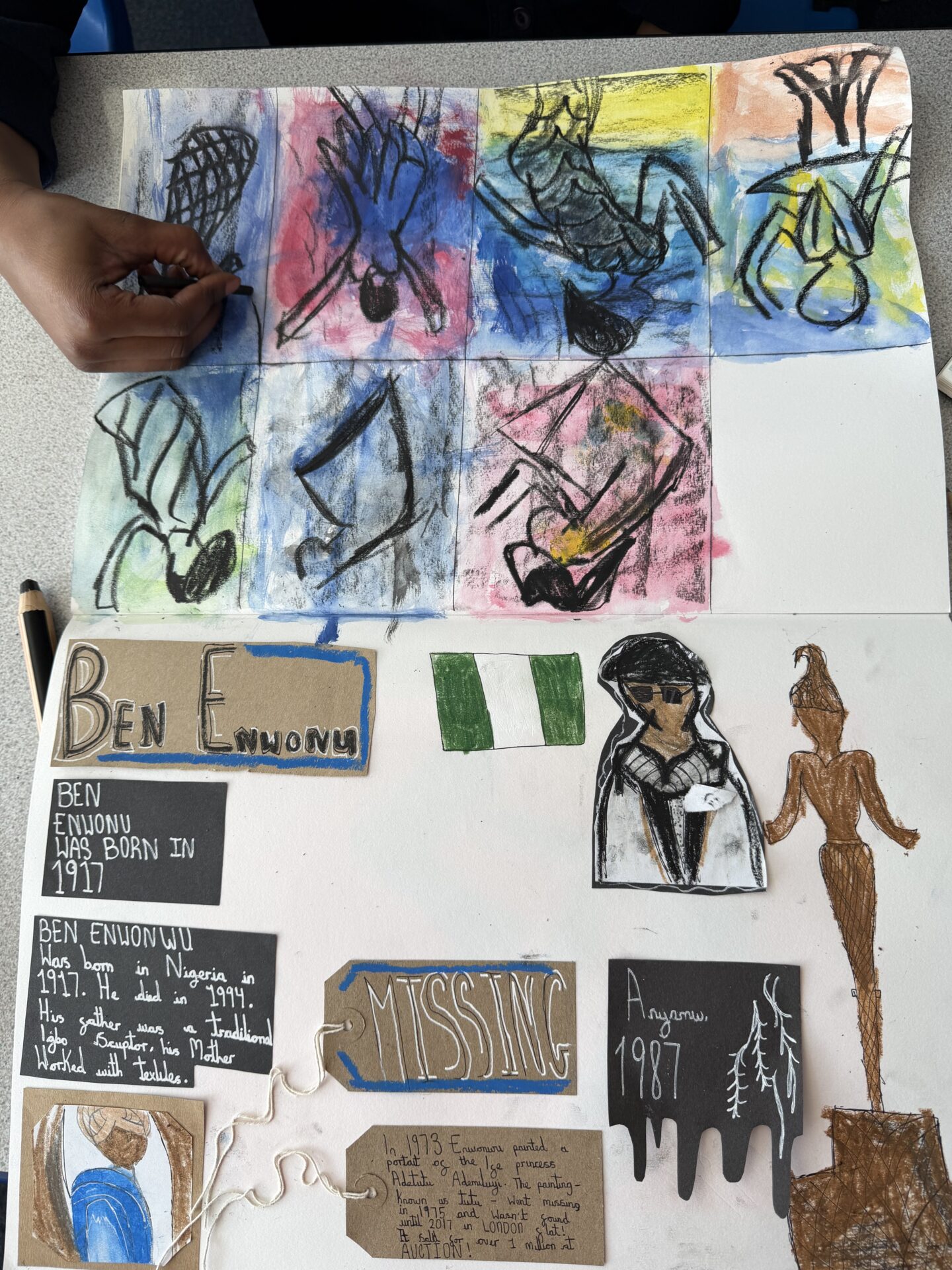
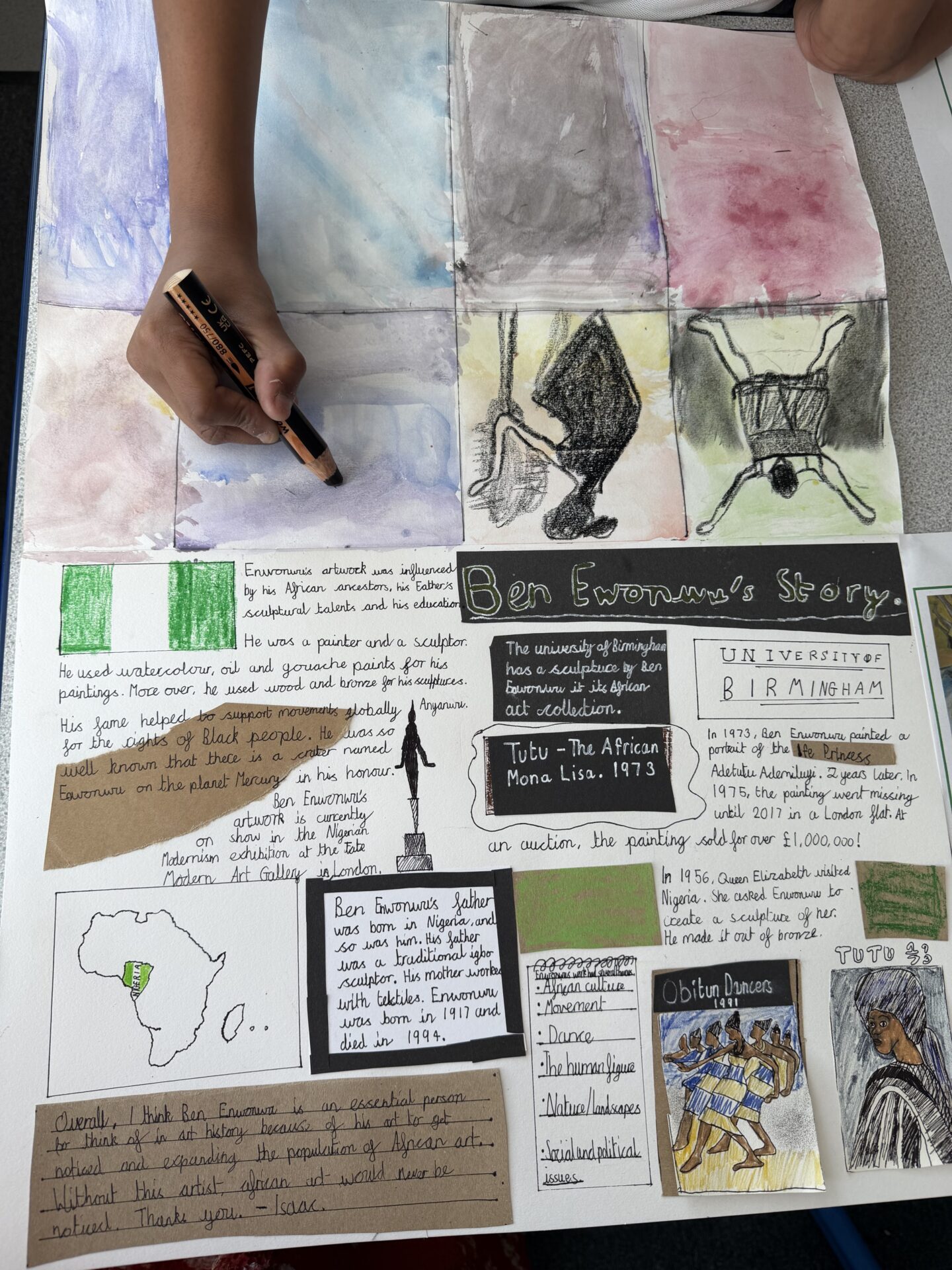
Pupil voice gathered in May 2026 was overwhelmingly positive. Pupils commented that they could relate to many of the artists studied and described art and design as enjoyable, creative, and a valuable opportunity for self-expression. One pupil shared, ‘Ben Enwonwu’s family are from the same state in Nigeria as mine. That makes me feel really happy and proud,’ highlighting the importance of representation and cultural connection within the curriculum. Other pupils described the significance of the subject within school life, commenting that ‘art is a big part of our school’ and ‘art is exciting here.’ They also reflected on the creative and emotional value of the subject, explaining that ‘art in our school is a place where you can express yourself’ and ‘art here is fun and creates happiness in our school.’ These responses reflect the growing sense of engagement, belonging, confidence, and enthusiasm fostered through the school’s inclusive art and design curriculum.
Termly art galleries have been incredibly successful, with pupils, families, friends and members of the wider community filling the school hall to view the work produced as part of the new curriculum. Artwork from all year groups is presented as it would be within a professional gallery setting, displayed on boards, arranged on tables, and positioned on plinths to elevate presentation and impact. These events have generated thoughtful conversations about the work on display, strengthening dialogue between pupils, families, and staff. Pupils recognise the importance of these opportunities, with one explaining that ‘art is valued because we have a gallery to share the artwork with other people.’ These gallery showcases have helped to develop a strong sense of pride and have given pupils the experience of having their work publicly exhibited and appreciated by others.
Concluding thoughts
In conclusion, the development of an art and design curriculum shaped by the principles of mirrors, windows, and sliding glass doors has had a significantly positive impact on pupils, staff, and the wider school community at Holy Trinity. Pupils are increasingly engaged and their confidence has grown. They recognise themselves and their experiences within the curriculum, while also developing curiosity and respect for the lives and cultures of others.
Staff at Holy Trinity are committed to building on this work. While the curriculum has had a highly positive impact during this academic year, As new pupils and families join the school, the curriculum will continue to be evaluated to ensure that meaningful opportunities for both mirrors and windows remain embedded across the curriculum. Curriculum refinements will also be informed by emerging artistic trends, exhibitions and developments within the contemporary art world, ensuring that learning remains relevant, current and responsive to the wider cultural landscape
References
Bishop, R.S. (1990) ‘Mirrors, windows, and sliding glass doors’, Perspectives: Choosing and Using Books for the Classroom, 6(3), pp. ix–xi.
Holdstock, K. (2025) ‘Contested and neglected stories of art: A critical study of cultural representation within the primary art curriculum’, Educational Futures, 16(2), pp. 109–131.
Ofsted (2023) Art and design research review. Manchester: Ofsted.
Style, E. (1988) Curriculum as window and mirror. Summit, NJ: Oak Knoll School.
Thomson, P., Hall, C. and Maloy, L. (2025) The RAPS project: Researching the Arts in Primary Schools final report. Nottingham: University of Nottingham.
Runnymede Trust and Freelands Foundation (2024) Visualise: Race and Inclusion in Secondary School Art Education. London: Runnymede Trust.