
FEYISA DEMIE, DURHAM UNIVERSITY, UK
Abstract
This study aims to explore effective targeted intervention strategies to address educational inequality among disadvantaged students. There are key messages from the study. The findings of the school survey suggest that schools used a range of targeted interventions, such as early intervention, small-group additional teaching, one-to-one tuition, parental involvement, booster classes, improving attendance, mastery learning, phonics, pastoral care and enrichment programmes, to drive improvement and close the achievement gap. Each of the above intervention strategies was explored in detail in the paper. The overall conclusion of this study is that schools have closed the achievement gap between disadvantaged pupils and their peers through the use of a range of effective intervention strategies.
Introduction
This study explores the key intervention strategies to tackle educational inequality among disadvantaged students in schools. One of the policy concerns in education in England in the last three decades has been how to close the achievement gap of disadvantaged students. A substantial body of research has attempted to explain the many factors associated with disadvantage and achievement in schools, including poverty across generations, teachers’ low expectations, poor housing, lack of parental engagement, low literacy levels and curriculum barriers (see Demie, 2023; Macleod et al., 2015).
Several studies have also highlighted how certain schools have successfully challenged the conventional link between poverty and low academic attainment through the strategic implementation of targeted interventions. Research conducted by the Education Endowment Foundation (EEF, 2023) and Demie (2023, 2024) highlights the effectiveness of various intervention strategies. These strategies include effective feedback mechanisms, peer tutoring programmes, early intervention initiatives, personalised one-to-one tutoring, booster classes tailored to specific subjects, mastery learning approaches, phonics instruction, small-group tuition, metacognitive strategies and targeted reading comprehension techniques. These interventions have shown significant promise in supporting the academic progress of disadvantaged pupils.
Methods
The methodological approach of this research involved a targeted intervention survey. To investigate effective practices and targeted interventions, we asked headteachers and senior management teams in schools to complete a survey (Demie, 2024). The survey included questions about intervention strategies, such as ‘What factors are identified as the most effective strategies to support disadvantaged children in schools?’. The survey used a 7-point scale, from ‘strongly disagree’ to ‘strongly agree’. We also included open-ended questions for respondents to identify key contributing factors.
The survey was undertaken between December 2023 and March 2024 in London schools (Demie, 2024). Survey responses were received from 183 headteachers, senior management team members and school staff.
Findings
The survey highlights several key areas where educational institutions are focusing their efforts to improve student achievement and reduce educational inequality.
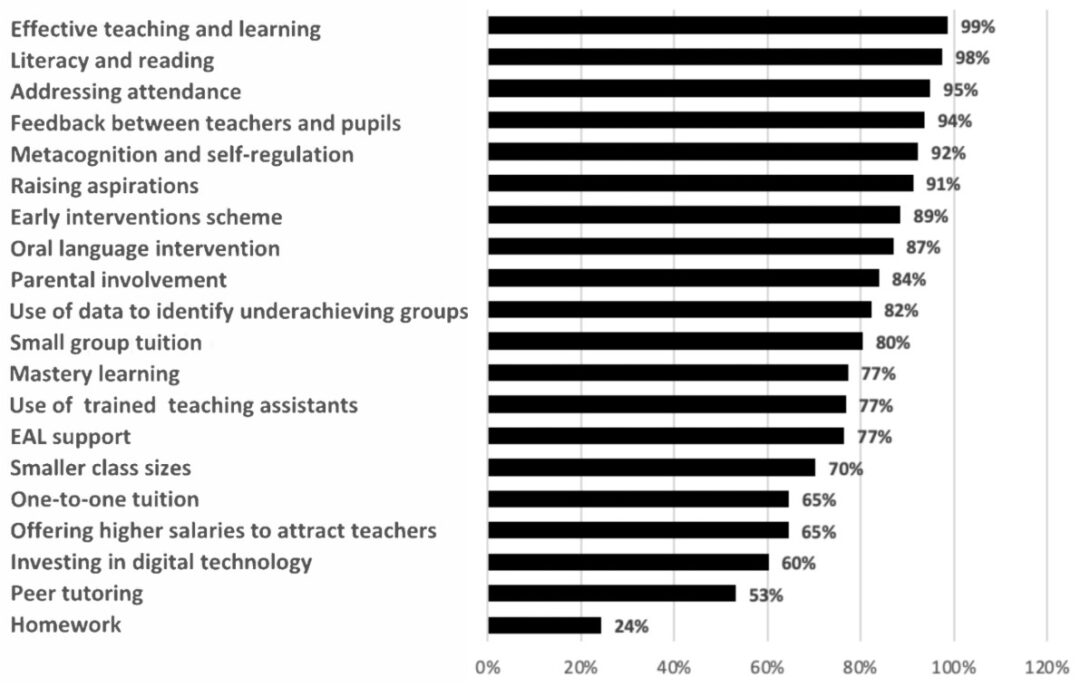
Figure 1: A survey of the targeted intervention strategies used by schools to raise attainment (Demie, 2024)
The main findings, shown in Figure 1, indicate that a significant number of respondents either agree or strongly agree on various factors influencing these objectives.
This targeted intervention and support data can be systematically categorised into several distinct themes, as follows:
- Teaching and learning strategies: An overwhelming 99 per cent of respondents advocated for the implementation of effective teaching and learning strategies, highlighting their critical role in enhancing student outcomes and overall educational success. These strategies encompass a variety of methodologies, including active learning, differentiated instruction and formative assessments, which cater to diverse learning styles and needs. Additionally, there was a strong consensus on the importance of literacy and reading, with 98 per cent of participants emphasising its foundational role in academic achievement. This focus on literacy extends beyond basic reading skills; it encompasses fostering a love for reading, developing comprehension skills and cultivating critical thinking, all of which are essential for students as they navigate their educational journeys.
- Student engagement and support: A significant majority of respondents, totalling 95 per cent, recognised the critical importance of addressing attendance as a key factor in student success. Ensuring that students are present in the classroom lays the foundation for their learning experiences. Additionally, an impressive 94 per cent of respondents emphasised the importance of fostering effective feedback mechanisms between teachers and students. This two-way communication is essential, not only for clarifying learning objectives but also for helping pupils to understand their strengths and areas for improvement. Furthermore, 92 per cent agreed on the value of promoting metacognition and self-regulation among students. By encouraging learners to reflect on their own thinking processes and regulate their learning strategies, these approaches aim to engage students more deeply in their education and equip them with vital life skills. Together, these strategies form a holistic framework designed to enhance student engagement and personal growth.
- Raising aspirations interventions: An overwhelming 91 per cent of respondents considered raising student aspirations to be a vital component for academic success. This method focuses on inspiring students to set higher goals for their education and future careers. Similarly, 89 per cent of those surveyed emphasised the importance of early interventions, which aim to identify and support students who may be struggling before their challenges escalate. These initiatives are designed to inspire students, promote a growth mindset and provide timely, personalised support to those in need, ensuring that every learner has the opportunity to excel both academically and personally.
- Language interventions and parental involvement: Oral language interventions are implemented in 87 per cent of educational settings and are recognised as pivotal for enhancing communication abilities and overall academic performance. Additionally, parental involvement, reported at an impressive 84 per cent, plays a vital role in reinforcing students’ learning experiences and fostering their motivation. This highlights the essential need for cultivating robust partnerships among schools, parents and the wider community, as such collaborative efforts create a supportive environment that significantly contributes to student success and wellbeing.
- Effective use of data to drive improvement and target interventions: The use of data, which stands at an impressive 82 per cent, plays a crucial role in guiding teaching practices, highlighting a strong commitment to evidence-based decision-making in the educational process. This reliance on data ensures that teaching methods are both effective and tailored to meet the diverse needs of students. Additionally, the provision of small-group tuition, with an engagement rate of 80 per cent, further underscores the emphasis on personalised learning. This approach allows educators to focus on specific student needs, fostering a more interactive and supportive environment that enhances individual learning outcomes. Together, these strategies reflect a determined effort to create a more effective and responsive educational framework.
- Additional EAL support: About 77 per cent expressed strong support for several educational strategies designed to enhance EAL (English as an additional language) student learning and engagement. These include mastery learning, which emphasises the importance of ensuring that students achieve a deep understanding of the material before progressing; teaching assistant support, which provides personalised assistance to help students to navigate their learning challenges; EAL support, aimed at helping non-English speakers to overcome language barriers; and the implementation of small class sizes, which fosters a more focused and individualised educational experience. Each of these strategies plays a crucial role in addressing the diverse needs of students facing various challenges, whether due to language difficulties, learning disabilities or other socio-economic factors. By incorporating these approaches, teachers can create a more inclusive and supportive learning environment that promotes academic success for all students.
- Investment in technology and human resources: A substantial 60 per cent of respondents expressed a strong belief in the importance of investing in advanced digital technology to improve learning outcomes in educational settings. This commitment to technological enhancement reflects a recognition of the pivotal role that innovative tools can play in modern education. Additionally, 65 per cent of participants advocated for increasing teacher salaries as a strategic approach to attract and retain skilled educators, which could improve student performance. These insights suggest a comprehensive approach to enhancing the educational landscape through various interconnected strategies.
- Less common practices: Practices like peer tutoring and homework are less widely supported but are still seen as valuable by some respondents.
The survey highlights a consensus among respondents on the need for a comprehensive approach to improving education and reducing inequality. This approach includes effective teaching methods, student support, technological investment and community engagement. Additionally, the survey and an interview with a headteacher revealed various targeted interventions used in schools, including small-group tutoring, one-to-one tuition, using strong teachers for key subjects, trained teaching assistants, parental involvement, booster classes and enrichment programmes like cultural trips.
Other comments about the targeted intervention strategies in schools were made by headteachers who responded to the survey. One headteacher highlighted:
We offer a range of interventions and support to vulnerable children: support with the transfer of Key Stage 2 to Key Stage 3, a pupil mentor, helping with forming friendships, helping to ensure entitlement to free school meals, encouraging participation in extracurricular activities, and regular communications with parents. The school has a strong support system in place and goes the extra mile to support children and ensure their needs are met.
Headteacher 2
This was also supported by other headteachers, who mentioned:
Early morning interventions, in class in a small group with a TA [teaching assistant] or one-to-one support tailored to individual needs; assessments at the end of Year 5 covering Year 6 SATs papers; tailored questions; and gap analysis to identify pupils needing further booster classes after school and a summer school led by an assistant head and a Year 6 teacher for Year 5 pupils.
Headteacher 4
Supporting children with complex SEND [special educational needs and disabilities] (e.g. ASC [autism spectrum condition] or ADHD [attention deficit hyperactivity disorder]) in an environment that does not create overstimulation and anxiety is ideal.
Headteacher 5
Conclusions and implications for policy and practice
This research examined the targeted support and intervention strategies used by the case study schools to support disadvantaged pupils. It asks questions about targeted intervention strategies, including ‘What are the factors identified as the most effective intervention strategies to support disadvantaged children in schools?’. The main findings from the study indicate that the school implemented various intervention strategies and support systems to address disadvantages and inequalities, including small-group additional support, one-to-one tuition, effective feedback, use of the best teachers to teach English/maths in the intervention group, booster classes using the class teachers, addressing attendance, metacognition and self-regulation, early interventions, parental involvement, effective use of data, mastery learning, EAL support, SEND support, homework and enrichment activities.
The study concludes that schools use a range of targeted interventions, including early intervention, one-to-one tuition and booster classes, to support students. Classroom teachers provide tailored support in English and maths, while expert teachers lead small groups to address learning gaps. Enrichment activities, parental involvement and well-trained teaching assistants also enhance learning experiences. The strategic use of pupil premium funding has made a significant contribution to closing the achievement gap, particularly for disadvantaged pupils.
There are also implications for practice and the future research agenda. This research provides accessible evidence for teachers and headteachers regarding targeted intervention strategies designed to tackle educational inequality. Our study is based on data collected through a survey. However, it is essential to acknowledge the limitations of our research framework, as our methodology may be subject to constructive criticism for not entirely referencing student outcomes or conforming to academic standards concerning research sampling and design. Our findings should be viewed as preliminary insights, originating from a small-scale survey of schools in London, which warrant further exploration. Nevertheless, the survey data provides valuable insights into school practices beneficial for teachers and school leaders. We recommend that future research adopts a large-sample longitudinal approach at the national level to understand the impact of targeted interventions on educational inequality over time.