
DR SOPHIA KAPCIA, EDUCATIONAL STRATEGIST; INCLUSION AND EQUITY CONSULTANT; CREATOR OF THE KAPCIA FRAMEWORK
Behaviour is often interpreted through a lens of compliance, with students who withdraw, challenge authority or disrupt lessons viewed primarily as behaviour management concerns. Yet during more than 20 years of teaching English in secondary schools, particularly in communities experiencing disadvantage and high levels of special educational needs and disabilities (SEND), I increasingly questioned whether behaviour was something to manage or something to understand.
Drawing on Crenshaw’s (1989) concept of intersectionality and Gillborn’s (2015) work on structural inequality in education, I became more conscious that behaviour could not be separated from the wider social, cultural and educational contexts in which students lived. During my doctoral research, this realisation informed my development of the KAPCIA Framework (Knowledge, Awareness, Practice, Culture, Inclusion and Advocacy), which translates intersectional theory into everyday classroom practice (Kapcia, 2023).
The framework has become the lens through which I now reflect on classroom behaviour. It is a continuous reflective cycle that sees behaviour as a form of communication rather than a compliance problem. Rather than representing a linear sequence of steps, the KAPCIA Framework supports ongoing professional reflection in which teachers draw on research, critically examine their assumptions, adapt their practice and advocate for more inclusive learning environments (Figure 1).
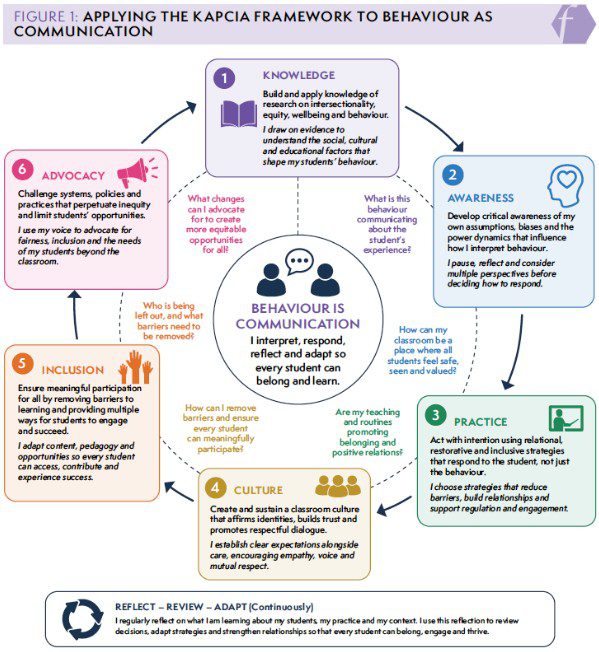
Figure 1: Applying the KAPCIA Framework to behaviour as communication
The classroom reflections that follow demonstrate how each element of the framework has informed my responses to behaviour in practice.
Seeing withdrawal through the lens of knowledge and awareness
One example that fundamentally changed my practice involved a Year 9 student who regularly placed his head on the desk whenever extended reading activities began. Earlier in my career, I might have interpreted this behaviour as disengagement or low motivation and responded by encouraging compliance with the task.
However, engaging with research on intersectionality and student wellbeing prompted me to question my initial assumptions. The Knowledge element of the KAPCIA Framework encouraged me to consider how literacy difficulties, poverty-related stress and previous experiences of educational failure might intersect to shape the student’s response to learning. Awareness required me to reflect on my own tendency to interpret quiet withdrawal through a deficit lens rather than asking what the behaviour might be communicating.
Instead of insisting that the student continue reading independently, I reduced the cognitive demands of the task by providing a scaffolded text, checking in privately and offering alternative ways in which to engage with the lesson. This approach reflects the Education Endowment Foundation’s (EEF, 2021) recommendation that teachers should prioritise high-quality adaptive teaching and remove barriers to learning before assuming that behaviour is the primary issue.
Practice and culture: Responding to defiance relationally
My research also influenced how I responded to students who were frequently described as ‘defiant’. In secondary English classrooms, discussions around identity, justice and power can evoke strong emotional responses. Students whose previous experiences have been characterised by exclusion or inconsistency may be particularly sensitive to perceived unfairness or public correction.
Previously, I might have escalated sanctions to reinforce classroom expectations. Through applying the KAPCIA Framework, however, I began viewing these situations differently. The Practice dimension encouraged me to respond relationally rather than reactively, maintaining clear expectations while preserving students’ dignity. At the same time, Culture prompted me to consider whether my classroom itself fostered belonging by ensuring that students’ identities, experiences and voices were reflected within the curriculum and classroom dialogue.
These changes reduced conflict rather than increasing it. Students were more willing to engage in restorative conversations because they recognised that expectations remained consistent while relationships remained respectful. This reflects Noddings’ (2013) argument that meaningful learning is grounded in relationships built on trust and care.
Inclusion and advocacy: Understanding disruption as communication
Another recurring pattern involved students who regularly called out answers, interrupted discussions or used humour inappropriately. Initially, these behaviours appeared disruptive. However, viewing behaviour through an intersectional lens encouraged me to consider whether these actions represented attempts to establish visibility and belonging within the classroom community.
The Inclusion element of the framework led me to redesign learning activities so that students had more structured opportunities to contribute through paired discussion, collaborative learning and multiple forms of participation. Rather than expecting all students to demonstrate engagement in identical ways, I sought to provide different routes into classroom dialogue.
The Advocacy dimension extended this reflection beyond individual lessons. It challenged me to question whether behaviour policies and classroom routines unintentionally disadvantaged students whose communication styles or previous educational experiences differed from dominant expectations. These reflections informed professional conversations with colleagues about adopting more relational and inclusive approaches to behaviour across the department.
Conclusion
Although these reflections are drawn from my own classroom practice rather than formal empirical evaluation, they suggest that interpreting behaviour as communication, rather than non-compliance, can strengthen students’ sense of belonging, support re-engagement with learning and foster more positive teacher–student relationships. For me, the KAPCIA Framework provides a practical bridge between research and everyday classroom practice, encouraging teachers to respond to behaviour with curiosity, adaptive teaching, relational practice and a commitment to equity (EEF, 2021).