
OWEN MATTHEWS, FLEXIBLE EDUCATION, PETERHOUSE SCHOOL, UK; AUTISM INITIATIVES, SOUTHPORT, UK
Introduction
National figures show that students with SEND have far greater rates of absence than those without, with severe absence markedly higher among students with an EHCP (education, health and care plan) than among those without identified SEND (DfE, 2025). What is commonly referred to as ‘emotionally based school avoidance’ (EBSA) is often characterised as a symptom of lockdowns and school closures during the COVID-19 pandemic. While the attendance crisis has intensified since COVID-19, it was emerging long before the pandemic (Hamilton, 2024).
Since 2016, as a non-maintained school for pupils with autism, we have been involved in the development of a provision for students unable to access school, the vast majority of whom have been out of education for a significant period of time. Practice is informed by an understanding of our cohort, and we now recognise that our students share a number of common traits. Students in our cohort may be described as presenting with a particular profile of autism or as falling within a narrow demographic.
This perspective draws on existing research as well as a decade of our own case study experience, co-produced with past and present students and their families. It seeks to highlight how for some learners with autism who are unable to access school, it’s more helpful to interpret this as a response to unmet need than as a behaviour to be managed.
Demand avoidance and overlapping neurodiversity
Perhaps the most apparent trait among our cohort is demand avoidance, although of the 28 students that we have supported during the past 10 years, those with a diagnosis of PDA (pathological demand avoidance/pervasive drive for autonomy) or reference to this within their EHCP are in the minority.
PDA is a subject that has historically been a source of controversy, with varying opinions on whether it exists as a profile of autism or as a distinct neurological condition (Johnson, 2024). Whether or not this has led to misconceptions about the nature of demand avoidance, our case study work includes examples of MDT (multidisciplinary team) meetings where professionals have minimised its significance or severity, or dismissed its validity or even its existence.
We feel that it is important to make a distinction between PDA as a condition and demand-avoidant tendencies. Nevertheless, our approach draws on PDA strategies. When researching these PDA strategies, we became increasingly interested in the extent of similarity to elements of trauma-informed practice.
Through case studies co-produced with students and their families, we have been able to capture pupil voice and uncover more detail about their experiences. It is clear that, despite not being diagnosed with PTSD (post-traumatic stress disorder), all of our cohort could be described as having experienced trauma – most commonly linked to school and education. Research indicates that there may be differences in the way in which people with autism experience and respond to trauma, and also that what constitutes trauma for people with autism may not be captured by conventional diagnostic frameworks (Haruvi-Lamdan et al., 2018; Brewin et al., 2019). The correlation between autism, trauma, demand-avoidance and EBSA therefore merits further exploration.
Diagnosis, autism best practice and ‘off the shelf’ strategies
To effectively meet the needs of individual students, those needs must first be adequately understood. The needs of the students referred to our provision have not been met in mainstream education, where there may be insufficient staffing capacity to make necessary adjustments. If there is no EHCP in place, then these individual adjustments and associated additional support are even less likely. Where there is a diagnosis, the tendency is to determine need through diagnostic criteria, and this often leads to support being provided through the lens of ‘good autism practice’. For professionals responsible for providing this support, the notion of ‘good autism practice’ is subjective and dependent upon the scope of their experience and understanding. Emerging research from the school with which our provision is linked suggests that there are some students for whom best practice may in fact be the problem, and not the solution (Fleming and Thompson 2025).
By working alongside students, we are able to uncover more about their perceptions of autism. A lack of follow-up work to support understanding of their diagnosis means that many are left to form their own perceptions of neurodiversity and autism, through information accessible online or via social media. The broader definitions of autism most readily available online do not always correlate with the lived experiences of students, and this disconnect can lead to confusion, anger and rejection of diagnosis.
Through the case studies co-produced with our students, we know that many of the strategies widely associated with good autism practice prove to be unsuccessful with this cohort. This is particularly true of support applied as a time-limited intervention with the aim of getting somebody back into school. That which is time-limited in nature carries with it an inherent demand, which therefore sets demand-avoidant students up to fail at the outset.
Working alongside this cohort over several years has led us to conclude that there is a particular demographic of young people with autism who are falling through the gaps in our education system. The outcomes achieved by many in our cohort demonstrate that it is possible for these students to become successful adults and to make progress in education and employment, when needs are understood and effectively met. The adjustments required are not always complex or logistically disruptive. Case studies indicate that these adjustments may include a different, more individualised outlook on support and success, an acknowledgement of the need for patience and an emphasis on collaboration.
ImpactEd Group (2024) found that collaborative approaches to attendance are more effective than punitive ones. As schools have moved towards greater conformity and sanction, our cohort represents students who have quietly retreated to the perceived safety of home. When professionals insist that they are seen, demand engagement or threaten punitive measures, these students may retreat further, with trust in support eroded.
This is frequently the situation at the referral stage. We meet young people who are dangerously isolated. Some have been unable to leave the house for several years, with many unable to attend medical appointments. Self-harm and suicidal ideation are common, as are acute concerns about mental, emotional and physical wellbeing. Our task is to find ways to re-engage students and families for whom there is a complete breakdown of trust in professionals and a fear of the wider world.
These are young people whose needs cannot be interpreted through diagnostic criteria alone. Effectively uncovering the intersectionality of need for these students requires an adequate investment of time and must allow for consideration of undiagnosed overlapping neurodiversity and past trauma. Only then can perceptions associated with school be reframed and barriers to engagement be understood and addressed.
Conclusion
PDA is sometimes described as a ‘pervasive drive for autonomy’. For demand-avoidant individuals, pressure to come out of their bedrooms, engage with professionals, return to school or complete tasks or academic work is most likely to further exacerbate a sense of otherness and failure. Instead, a low-demand, non-directive approach intended to remove pressure can allow for a renewed sense of autonomy. In the early stages, this might mean objectives set around nothing more than connection with the team, or framing engagement as a choice rather than an expectation. By shifting the focus away from attendance, conformity and academic success, and towards connection, trust and consistency of routine, it is possible to lay foundations for re-engagement with education, and the wider world in the longer term.
Understanding individual need is a process to be approached by professionals working alongside these students over time. If the current drive towards inclusion in education is to be a catalyst for meaningful change for the better, then professionals must understand the distinction between equality and equity, and that treating students equally does not necessarily mean treating them the same as one another. As educators, we must have the confidence to recognise that impact cannot always be measured by exam results, and that there is significant inherent value in supporting a developing understanding of personal identity and sense of self.
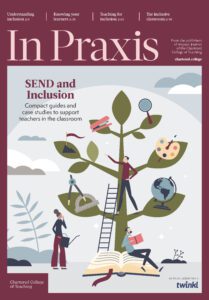
Read more from In Praxis: SEND and Inclusion