
NAOMI ASHMAN, DOCTORAL STUDENT, UNIVERSITY COLLEGE LONDON, UK
Introduction
There is currently a SENDCo recruitment and retention crisis (Robertson, 2023). Many find fulfilling SENDCo responsibilities unsustainable and are reluctant to remain in the role (Curran and Boddison, 2021). Reasons for attrition include overwhelming workload, inadequate time and insufficient funding for special educational needs and disability (SEND) support. Given the acknowledged struggles with SENDCo retention, substantial SENDCo recruitment is required. However, schools often struggle to appoint SENDCos, frequently advertising the role unsuccessfully multiple times. Increasing the role’s attraction to a greater diversityThe recognition of individual differences in terms of race, ethnicity, gender, sexual orientation, socio-economic status, physical ability, religious beliefs and other differences of teachers could potentially increase equity while improving SENDCo supply and therefore student experience.
Aims
This project aimed to improve understanding of the factors deterring a wider range of teachers from seeking further responsibilities and professional progression through pursuing the SENDCo role. This could help school leaders and policymakers to consider how it can become a more appealing career trajectory.
Methods
The small-scale study explored participants’ experiences in depth, rather than intending to be representative. Through purposive sampling, three senior leaders were asked to participate, due to pursuing promotion to whole-school leadership roles during a period in which the school’s SENDCo vacancy was advertised. Audio-recorded semi-structured interviews explored factors influencing their decision to avoid the SENDCo role.
Analysis
Reflexive thematic analysis (Braun and Clarke, 2022) was used to analyse interview transcripts. Themes identified were organised in a simplified model based on Bronfenbrenner’s ecological systems (1979). Originally conceived to explain child development, Dobson and Douglas also used it to analyse the ‘different systems’ affecting teachers (2020, p. 299). Nested structures represent different spheres of influence (see Figure 1):
- individual: practitioners’ values and character shaping the ‘self’
- micro-level: interactions with colleagues, students and families
- meso-level: school culture, policies and practices
- macro: national policy agendas and legislative frameworks.
Findings
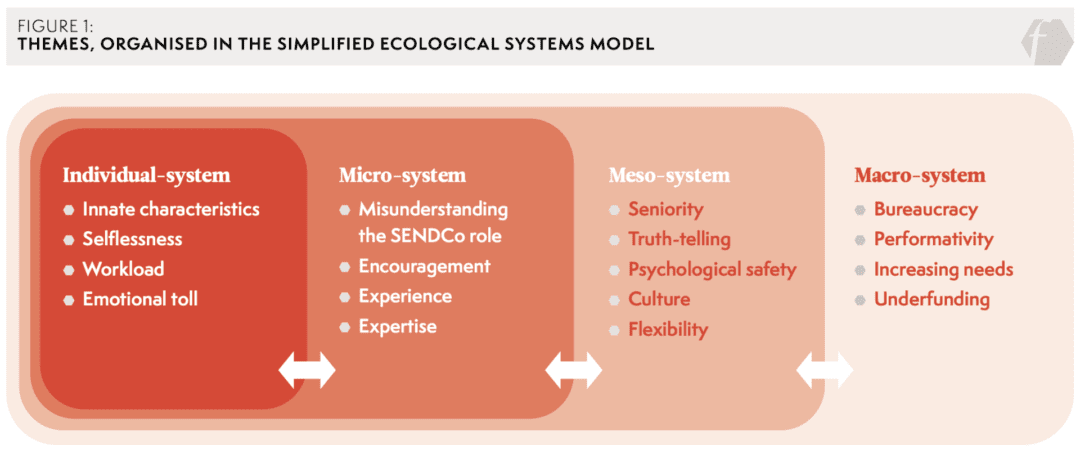
Figure 1: Themes, organised in the simplified ecological systems model
Individual-system
Participants used emotive language when describing SENDCos – ‘broken’, ‘knackered’, ‘underestimated’, ‘undervalued’ and ‘stretched’ – as well as strong adjectives to describe the role: ‘insane’, ‘unmanageable’ and ‘pressured’. Their discussion of challenges anticipated echoed the ‘storm of emotional experiences, frustrations and concerns’ described by Ekins and Hughes (2024, p. 64).
I think it takes a huge toll emotionally as well as professionally.
As a result, diverse applicants may be deterred due to believing that SENDCos require certain characteristics, including extreme ‘child-centred’-ness, with particular people being more naturally aligned to the role. Colum and Mac Ruairc (2023) found that existing school staff resist undertaking the SENDCo role because of the heavy workload’s effect on their wellbeing. A perceived need to be entirely selfless and others-focused could be off-putting to teachers who, like most SENDCos, don’t perceive themselves as gifted with exceptional generosity.
Recommendation
Senior leaders responsible for the recruitment and retention of SENDCos should encourage a broader range of teachers to seriously contemplate the SENDCo role as ‘an avenue for promotion’ (Dobson, 2023, p. 232). Benefits include personal growth and development through acquiring skills, qualifications and career advancement opportunities.
Explore and enhance current staff perception of the role. Protecting existing SENDCos’ wellbeing may positively affect future recruitment.
Micro-system
Misconceptions may influence teachers’ decisions to forgo the SENDCo role. Participants described their own leadership roles as ‘strategic’, ‘visionary’ and ‘directional’, while assuming that the SENDCo role was more ‘reactive’ and ‘hands-on’. Their understanding contradicts the SEND code of practice, which clarifies the expectation that SENDCos have whole-school strategic responsibilities (DfEDepartment for Education - a ministerial department responsible for children’s services and education in England and DoH, 2015). This indicates that SENDCos describing the job as ‘one of the hardest, loneliest, most misunderstood roles’ (Curran and Boddison, 2021) may be accurate.
Parents and colleagues expect SENDCos to fulfil in-house ‘expert’ adviser roles. However, this is often assumed reluctantly (Smith and Broomhead, 2019), with SENDCos doubting their capability and knowledge. One participant regarded insufficient knowledge as being a particular hurdle to inclusionAn approach where a school aims to ensure that all children are educated together, with support for those who require it to access the full curriculum and contribute to and participate in all aspects of school life, with a ‘knock-on effect’ increasing teachers’ resistance to considering the SENDCo role. Another articulated that ongoing training would support teachers and could influence receptivity to the SENDCo role:
If there’s specific training on different needs, that’s definitely going to engage people and maybe make them think, okay, yeah, actually that’s a route in my career that I could take.
Participants advocated ‘empowering staff’. Explicitly encouraging those teachers who demonstrate strengths in supporting students with special educational needs could increase the appeal of the SENDCo role:
I think we need to be more proactive. If we want more SENDCos, we’ve got to show that we believe in them, that actually we think they’ve got the qualities to do it, that we have complete faith they’d be really good at it.
Recommendation
Existing SENDCos should support succession planning, identifying teachers with the potential to thrive in the role (Devi, 2024). SENDCos could enthusiastically recognise colleagues’ positive inclusive practice. By focusing solely on the challenges of the role, viable candidates could be deterred from seriously considering this career path, whereas discussing rewarding aspects of the role and sharing SENDCos’ stories of their successes and satisfaction would provide a more nuanced and balanced view.
Schools should provide opportunities for all staff to complete accredited SEND training, increasing capability and confidence. For those potentially interested in the role, arrange opportunities to be mentored by and shadow SENDCos, experiencing day-to-day realities in practice.
Meso-system
While the SEND code of practice (DfE and DoH, 2015) recommends that SENDCos be included in a school’s senior leadership team (SLT), whether or not this is implemented varies widely and indicates the inclusivity of school culture (Kay et al., 2022). Without adequate seniority, influencing decision-making can be difficult (Done et al., 2021). Inclusion on SLT can signify ‘the importance placed on the role’ (Dobson, 2023, p. 224), potentially increasing its appeal.
Kay et al. reference SENDCos experiencing polarity, contention and ‘challenging the system and their own SLT’ (2022, p. 348). This was reflected in one participant’s comment:
What makes somebody the right person? Putting the children first, fighting their corner, being prepared to stick their head above a parapet, even when you know that you’re talking to [senior management team] or SLT, and they’re not going to like what you’re saying, but being prepared to do that.
Despite fulfilling leadership positions, the teachers interviewed felt reluctance to engage in ‘fearless truth-telling’ (Done et al., 2021, p. 79), due to anticipated SLT responses. Potential amplification of existing power asymmetries may mean that perceived ‘personal risk’ particularly dissuades applications from underrepresented people. Expectations that ethical responsibility would create ‘intrinsic motivation to work against the grain’ (Kay et al., 2022, p. 345) may be overwhelming. Participants proposed that psychologically safe (Edmondson, 2018) school cultures safeguard SENDCos. One reflected:
The leadership and the culture of the school and the values of a school have a huge impact. They play into job satisfaction, don’t they?
Recommendation
Schools should ensure that the SENDCo role is respected and valued with status and ‘clout’ (Curran, 2019) in their context. Develop psychological safety so that potential future SENDCos can envisage themselves championing children without fearing repercussions. Prospective future SENDCos must feel that advocating for students with SEND would be welcomed rather than disparaged, and that challenging the status quo would be celebrated as brave rather than deemed antagonistic.
Consider offering part-time and flexible-working options – 37 per cent of SENDCos work part-time (Dobson, 2023). Advertising roles flexibly could attract candidates with strong child-centred motivations – for example, those needing to balance the role with personal childcare commitments. Providing job-share options could also address the issues of isolation and loneliness within the SENDCo role identified by Curran and Boddison (2021).
Macro-system
Many macro-system factors represent common concerns related to the ‘SEND crisis’ (Long and Roberts, 2025): bureaucracy, performativity, underfunding and increasing needs. All participants reflected previous research findings that the SENDCo role demands an excessive time commitment. Done and Knowler (2021) recommend ‘government-funded sabbaticals for SENCOs’ (p. 449). If implemented, time dedicated to increasing knowledge might also increase the appeal of the SENDCo role.
Recommendation
System-wide reform must address significant insufficiencies within the current SEND model. As suggested by the Teaching Commission SEND roundtable, this could address teacher retention issues more broadly (Hughes, 2025).
Conclusions
Although small-scale, this study raises issues worth deliberation by school leaders wishing to increase SENDCo role appeal. The ecological systems analysis demonstrates that while some causes of reluctance reside in individuals and other deterrents are due to national (macro-level) challenges, much can be done within individual schools (meso- and micro-systems). To avoid a ‘SENDCo vacuum’, leaders must carefully consider factors influencing succession planning, seeking to make this role attractive to a broad range of teachers.