
DR ANNA COOK, LECTURER IN DEVELOPMENTAL PSYCHOLOGY, UNIVERSITY OF SURREY, UK
What does the research say?
Autism is a lifelong form of neurodivergence that shapes how a person communicates, processes sensory information and experiences the world around them. Around 3.2 per cent of students in England have autism recorded as their primary type of special educational need, and autism is the most common primary need among those with an education, health and care plan (EHCP) (DfE, 2026).
Mainstream schools are legally required to make reasonable adjustments for autistic students. However, autistic students are disproportionately affected by school-related emotional distress, persistent absence and elevated exclusion risk, often linked to unmet needs (Brede et al., 2017; Connolly et al., 2023). Seventy-one per cent report ‘lost learning’ from poorly adapted environments and negative school experiences (Ambitious about Autism, 2025).
What does it mean in the classroom?
In the classroom, autism can affect how students communicate, manage sensory input and cope with change. Autistic students may build relationships and interpret social cues in ways that differ from their peers; first-hand accounts suggest that these differences reflect a distinct way of experiencing the world, with difficulties often arising from how well the environment accommodates a student’s needs (Goodall, 2018). Many autistic students also experience heightened or reduced sensitivity to noise, light and touch, which can cause sensory overload and distress in a typical classroom (Ashburner et al., 2008). Restricted interests, a strong preference for routine and repetitive movements, sometimes called stimming, are common and often serve a self-regulating function (NAS, 2025).
Crucially, autism does not present in a linear or uniform way; two autistic students may have very different strengths, needs and support requirements (NAS, 2025). Girls in particular may camouflage their difficulties in order to fit in socially, which can delay identification and mean that their needs go unmet for longer (Wood-Downie et al., 2021).
Action points for teachers
- Adapt the physical environment: Reduce unnecessary visual displays, dim harsh lighting, minimise background noise and create a designated quiet space that students can use when overwhelmed. These changes have been linked to improved focus, reduced anxiety and greater participation among autistic students, and they cost little to implement (Martin and Wilkins, 2022).
- Build predictability into the school day: Use visual timetables, ‘now and next’ boards and priming activities to preview upcoming content, activities and expectations before a lesson begins. Giving advance notice of changes to routine reduces anxiety and supports smoother transitions between tasks and environments (Liang et al., 2024; Emerson and Costley, 2023).
- Prioritise strong, trusting relationships: Take time to get to know each student as an individual, and aim to be a consistent, predictable presence in their day. Autistic students report that feeling accepted and understood by peers and staff, rather than treated as fundamentally ‘different’, is central to their sense of identity and belonging at school, suggesting that relational inclusion is as important as any single behavioural strategy (Boddy and Cook, 2026; Mesa and Hamilton, 2022).
- Support social inclusion proactively: Peer support schemes co-designed and led by neurodivergent students have been found to be feasible and well received in mainstream secondary schools, helping to build community and reduce isolation (Crompton et al., 2024). Any disclosure of a student’s needs should only take place with the agreement of the student and their family.
- Communicate regularly with parents and carers: Share progress and successes as well as concerns, and involve families in setting goals for their child. This consistent, two-way communication is repeatedly identified by parents as central to feeling that their child’s needs are understood and met at school and it helps to ensure that strategies used in school are reinforced at home (Whitaker, 2007).
Top tips
- Get to know each student’s individual profile of strengths and barriers, which can inform planning and task design, rather than applying a single approach to every autistic student.
- Small, low-cost environmental changes, such as reduced visual clutter, softer lighting and a designated quiet space, can make a significant difference to engagement, participation and wellbeing.
- Do not wait for a formal diagnosis. Record what you observe, capture and identify barriers to learning, ask colleagues what their experience has been and what works, and then share this with your school’s special educational needs and disabilities co-ordinator (SENDCo). Involve parents sensitively and early in the process.
- When a task isn’t working, rather than asking what the problem is with this child, ask what is wrong with this environment that prevents this child from succeeding.
Want to know more?
Practical, regularly updated guidance on identifying and supporting autistic students across all phases of education is provided by the National Autistic Society: autism.org.uk/advice-and-guidance/topics/education
The Education Endowment Foundation has accessible, evidence-based guidance reports summarising ‘what works’ for teachers supporting students with special educational needs and disabilities: educationendowmentfoundation.org.uk
The Neuroinclusive Education Network (formerly the Autism Education Trust) provides free guidance materials and structured CPD training for school staff, developed with autistic people and their families: nen.org.uk/resources
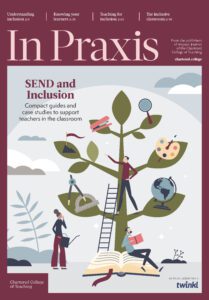
Read more from In Praxis: SEND and Inclusion