
HESTER RICHARDSON, PATHWAY LEAD, MA/MQ ‘EDUCATION OF CHILDREN WITH MULTI-SENSORY IMPAIRMENTS’ PROGRAMME, UNIVERSITY OF BIRMINGHAM, UK
Introduction
Multi-sensory impairment (MSI), or deafblindness, has been recognised as a third and separate sensory disability in the UK since 1989 (Hodges et al., 2019). The terms ‘multi-sensory impairment’ and ‘deafblindness’ are used by different professional groups to mean the same disability – a combined loss of vision and hearing. More than the adding together of vision impairment and deafness, the multiplying impact of a dual sensory need has a unique impact (Aitken et al., 2013). The term ‘multi-sensory impairment’ does not necessarily mean that more than two senses are involved, and may or may not mean that the child has additional physical or cognitive disabilities. Rather, the term aims to imply that reduced information from our main distance senses (vision and hearing) will have a multiplying impact, each upon the other. For example, individuals will have different experiences of severity, and of timing and progression of two separate sensory needs. This means that each child with MSI is likely to have a unique profile of needs. Associated physical and cognitive disabilities and unique pathways for communication all mean that provision for children with MSI will need to be carefully planned and adapted (Kamenopoulou, 2022).
What do teachers need to know?
Children who experience a difficulty with vision or hearing alone will use the other remaining distance sense to compensate – so a deaf child will rely on vision to lip-read, observe emotions and check what others are doing. A child with vision needs may rely on hearing to recognise voices, locate items and people in space, and listen to verbal descriptions of what is around them. Without an ability to compensate, even where a second loss is much milder, the impact on the child can be significant, especially if a progressive loss affects those very strategies that they may have already developed (Nordic Welfare Centre, 2024).
Relying on partial or unclear information from our distance senses requires concentration and additional time to process. It is doubly difficult to look and listen at the same time – particularly when new information is being presented. Further, learners with MSI may experience significant gaps in their early foundational knowledge and understanding of the world around them.
Utah State University (n.d.) presents the way in which typically sighted and hearing children learn through the image shown in Figure 1.
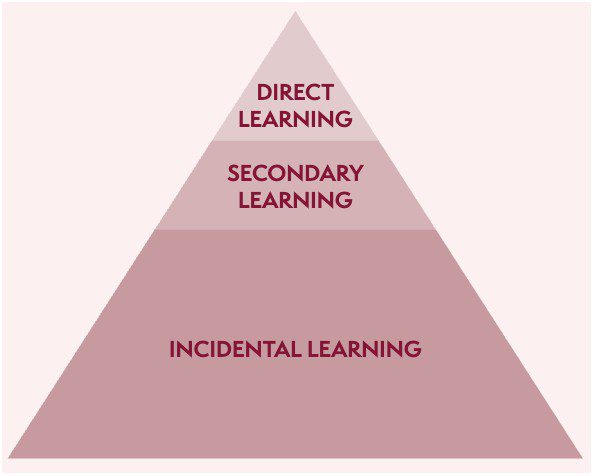
Figure 1: How typically hearing and sighted children learn (Utah State University, n.d.)
However, they reverse the image to represent the needs of children who have MSI (deafblindness) (see Figure 2).
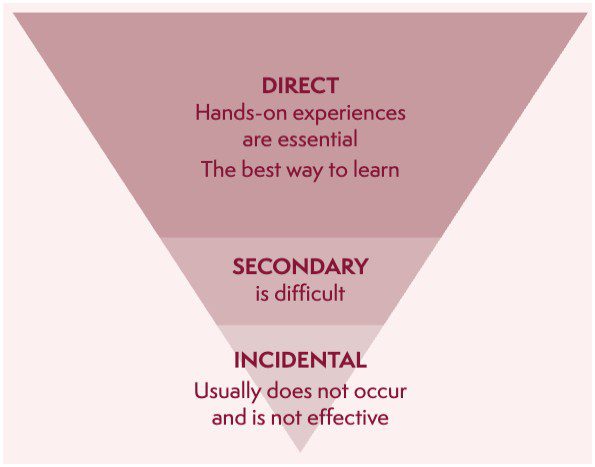
Figure 2: How children with MSI learn (Utah State University, n.d.)
This means that key concepts that other children learn independently may have been missed. Additionally, poor health, leading to extensive absences, can mean reduced opportunities to consolidate learning. These gaps in knowledge or a slower speed for accessing new information should not be seen as an inability to understand and engage with new concepts – it is more that how these new concepts are taught may need careful adjustment for access and pace of learning, and careful assessment of prior knowledge.
Action points for teachers
- Make your classroom an accessible classroom for all learners.
- Keep background noise to a minimum and consider factors such as open doors and nearby sound sources; individuals with good hearing can tune out background noise, but those with hearing needs or hearing aids find this very difficult.
- Ensure that rooms are adequately lit, and that boards are clean and pens are fresh – grey writing on a grey board is much harder to read. Make sure that lights are dimmed so that smartboards present an effective contrast.
- Ensure that tasks are broken down into time for looking and time for listening – doing both together can be especially difficult where both senses are affected, and additional concentration is needed to gain the most from each.
- Where a single sensory impairment does not seem to explain difficulties in learning, find out when the supporting distance sense was last assessed. Deterioration can easily slip past unnoticed, and even a mild or fluctuating loss in both senses can have an impact on learning (Hill et al., 2019).
- Ensure that new information is presented in different ways – through visual, verbal, written, kinetic and tactile means. Ensure that direct teaching is available to support incidental learning, and that children with MSI are near to the teacher and can touch and physically engage with concrete resources in ways that build conceptual understanding.
- Check that key language has been clearly understood and that foundational concepts are in place before moving on – children love to be successful, and task completion strategies may conceal important knowledge gaps.
Top tips
- Ensure that access to visual and auditory learning is optimum. Qualified teachers of multi-sensory impairment (QTMSIs) and other sensory specialists can advise.
- Create a learning environment that is accessible to all, which conveys new information in a range of different ways.
- Where a QTVI (qualified teacher of children and young people with vision impairments), a QToD (qualified teacher of the deaf) and potentially other professionals are involved, ensure that a key professional is identified (ideally a QTMSI) who can bring often-contradictory advice and outcomes together into a coherent plan.
Want to know more?
- Children with MSI are amazing! They are resourceful, hard-working and keen to do well. They often work through fatigue, headaches and a range of other health needs in order to learn.
- Further information about MSI, how to develop effective education, health and care plan (EHCP) advice and outcomes, and effective strategies to support learning and access can be found on the NatSIP website, the professional organisation for sensory specialist teachers: www.natsip.org.uk
- QTMSI specialist teachers are rare but can make a significant difference to children’s lives. Consider accessing Experts at Hand funding in your local authority to train as a QTMSI, and gain a master’s-level qualification to support your career: www.birmingham.ac.uk/study/postgraduate/subjects/teacher-education-courses/multi-sensory-impairment-ma
- You may find this recent article by Hill et al. (2010) of interest, in that it examines the impact on access and progress for children with even very mild MSI (see references).
- To support identification of children with MSI, you may find the article by Anthony (2016, see references) helpful.
- This article by Lindsay and McPherson (2012, see references) captures the views of children and young people with cerebral palsy (often associated with MSI) on what best supports their social inclusion in mainstream settings.
Read more from In Praxis: SEND and Inclusion