
MARIE OTHILIE HUNDEVADT, INLAND COUNTY COUNCIL, NORWAY
LAMIS SABRA, ASSOCIATE DIRECTOR, CREATIVITY, CULTURE AND EDUCATION, UK
SZILVIA NÉMETH, T-TUDOK CENTRE FOR KNOWLEDGE MANAGEMENT AND EDUCATIONAL RESEARCH INC, HUNGARY
This case study will highlight the content, design, implementation and structure of the professional development (PD) of teachers in the context of the flagship ‘Art of Learning’ programme, which was led and co-developed by Creativity, Culture and Education (CCE) in the UK, Inland County Council (ICC) in Norway and T‑Tudok in Hungary.
What is the Art of Learning programme?
Kunsten å lære/The Art of Learning/ A Tanulás Művészete (AoL) was an international educational intervention (2021–2025), an original research project combining art-based learning, school development and neuropsychology. The intervention was designed to support the development of learners’ executive functions through arts-based learning and to expand teachers’ professional repertoire. AoL was implemented in nine primary schools in Norway and Hungary during 2021–2023. All grade 1 and 2 learners (ages five to seven) had 270 minutes of weekly art-based learning across a 48-week intervention. They followed a systematically designed cross-curricular curriculum rooted in the arts. Artists worked alongside teachers, supported by a tailor-made PD programme.
During an AoL session, they might have a little English, a little math, writing and reading practice, practising in collaboration, without it feeling very intrusive that we have to get this and that to cover a goal. In AoL, it comes very naturally.
Teacher 3, as cited in Németh et al., 2025, p. 34
The programme was built on studies of executive functions (Diamond, 2013), performative learning theory (Østern et al., 2019, 2024) and artists’ signature pedagogies (Thomson et al., 2012). Its principle was that by developing creative skills such as cooperation, curiosity, imagination, persistence and discipline (Spencer et al., 2012), learners’ executive functions would also have room to develop, and this would lead to improved learning outcomes (see Figure 1).
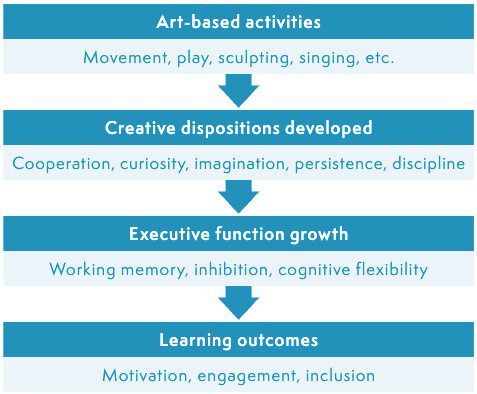
Figure 1: Procedure of art-based activities leading to improved learning outcomes
Through a cyclical development process involving design, testing and adjustments, the teaching programmes and the intervention were developed in close collaboration between teachers, artists and researchers, with art-based methods serving as a key driver for strengthening executive functions and motivation. Teachers were active co-creators who, together with the artists, tested new creative, learner-centred teaching strategies in the classroom. The project showed how such methods can support both academic and personal growth and create an inclusive learning environment where students thrive and develop.
In Art of Learning, you have fun while learning, and when you are having fun, it is easier for the brain to think it up.
Student 22, as cited in Németh et al., 2025, p. 14
An evaluation by the University of Inland Norway confirmed impact on motivation, creativity, engagement, inclusionAn approach where a school aims to ensure that all children are educated together, with support for those who require it to access the full curriculum and contribute to and participate in all aspects of school life and classroom environment, while teachers expanded their repertoire and professional roles (Kleiven and Kaderják, 2025; Németh et al., 2025). The results may contribute to making space for more arts and creative approaches to teaching and learning in schools.
Although AoL was a large-scale research project, this article presents a case study focusing specifically on the design and implementation of the PD programme for teachers.
Professional development of teachers
Professional learning and development of teachers, school leaders and artists was key to AoL, ensuring successful implementation (van den Akker, 2010). To provide intensive support for classroom experimentation and collaboration with artists, a PD programme was implemented before, during and after the intervention.
In AoL, teachers acted more as dramaturgs or mediators – structuring learning and creating frameworks – rather than transmitting knowledge, reflecting the theoretical perspectives outlined in the previous section.
Challenging the teacher role and taking risks with new approaches were central themes in the PD programme, alongside inclusion, building class community, collective work, recognising learners as resources, play and developing creativity-related dispositions.
It was very noticeable how, in the beginning, the children kept looking for a correct answer. They would come and ask, “Can I do it like this? Is this okay?” But over the year, they understood that they got to decide for themselves. I thought that was fantastic. Especially that creativity. That childlike imagination that is so creative and magical – they got so much more room to express it.
Teacher 8, as cited in Németh et al., 2025, p. 34
The programme included initial workshops, ongoing digital meetings, regular school visits, a mid-term workshop and a final reflection session.
How was the content delivered and structured in the PD programme?
The PD programme was carefully tailored to the context and target group, led by experienced facilitators from CCE, ICC and T‑Tudok and built on lessons from AoL pilots in Scotland and the Creative Partnerships Programme. It modelled good practice identified in Developing Great Teaching (Cordingley et al., 2015), integrating key features of effective continuing PD and learning. A crucial element was the active participation of school leaders throughout, both as advocates and in planning and implementation. The content challenged existing theories of learning, creativity and engagement in a non‑threatening way, providing teachers with a solid research base. Facilitators explored the content from multiple angles through practical, creative and art‑based approaches, consistently linked to classroom experiences via reflection and analysis – features shown to be central to successful PD (Cordingley et al., 2015).
How was the PD content reflected upon in school visits?
In the school visits, Cordingley et al.’s report (2015) was modelled to ensure that teachers received support to experiment in their classrooms, followed by reflection and analysis of observed AoL sessions and their experiences with implementation. As in the wider PD programme, facilitators upheld Nordin-Hultmann (2004)’s constructionist perspectives, focusing on the pedagogical context – time, space, tasks, adult role and instructions – rather than individual learner traits. This shift highlighted how organisation of time, space and materials shapes teaching and learning (Nordin-Hultmann, 2004). Relevant elements were pinpointed during observations and meetings, and then jointly analysed by teachers, artists and facilitators.
Practical example: Grouping and use of space
The PD programme aimed to address challenges that teachers faced in AoL classrooms and to support them in daily practice. Sessions differed from regular routines, especially in group work and use of varied spaces. Early teacher feedback described transitions as ‘challenging’ and ‘time‑consuming’, with some admitting that they had previously avoided group work or new spaces due to distractions.
This feedback revealed that regular school practice relied heavily on routines within limited spaces and grouping structures, while AoL insisted on variation. The response was not to change AoL, but to persist with tasks involving different groupings – both random and planned – and to use existing spaces in new ways. More time was allowed for transitions, but experience showed that repetition gradually made them smoother and even routine.
As a practical example, the PD programme deliberately mirrored the classroom practices that we wanted teachers to adopt when grouping students. It introduced a range of simple techniques for random allocation into pairs, threes and larger groups – for instance, matching mini‑jigsaw puzzle pieces, drawing coloured pencils from a bag or lining up according to birth date (1 to 31) before being divided into groups. These same methods were used with the teachers during the PD activities, enabling them to experience first‑hand how such approaches work in practice, just as their pupils would in the classroom. This was later echoed by one teacher:
I originally thought I had to assign all the pairs in advance to make sure the learners would be able to work well together. But by letting everyone try out different groupings and collaborate in many constellations, it has led to a situation where all the learners in our class can now work together with anyone.
Teacher, as cited in Hundevadt and Vik, 2025, p. 85
In a similar way, the PD programme was refined to model best‑practice collaboration, reflection and repetition. Positive reinforcement and playfulness were emphasised throughout, helping to establish supportive and engaging routines. Reflection sessions with learners were further highlighted as valuable opportunities to collectively address challenges such as transitions and group work. One simple technique, for instance, involves students sitting together on a matMulti-academy trust - a group of schools working in collaboration, governed by a single set of members and directors while the teacher briefly talks through what has happened in the session. Students are then asked to close their eyes, settle on a single word that captures how they felt about today’s session and raise their hand when they are ready. When everyone is ready, words are shared simultaneously or the teacher gently taps each student on the shoulder as the signal for them to speak. The teacher then listens for common themes and briefly reflects on these with the class. This approach can make reflection a regular, low-preparation part of lessons that can support teachers with gauging student understanding.
Programme outcomes and conclusion
From the evaluation of the AoL project, one of the main findings was that teachers experienced significant professional growth. Through collaboration with artists, they acquired new methods, fresh inspiration and a renewed sense of meaning in their teaching. As one student observed in their teachers:
We could see it in their body language, that they were enjoying themselves… They smiled a lot and were involved the whole time.
Student 13, as cited in Németh et al., 2025, p. 28
Many teachers shifted from a mindset of control to one of trust and openness – experimenting with groupings, adapting activities and gradually taking ownership of the creative process. This strengthened co-agency and enriched the educational experience for all participants (see Figure 2).
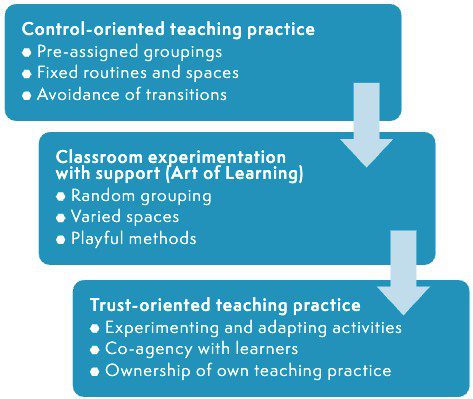
Figure 2: Transformation of teaching practice by the help of AoL intervention
The PD programme was central to these outcomes, enabling teachers to redefine practice while cultivating creativity, reflection and resilience.
At the start, I found it difficult to join in all the games and activities. You really have to step out of your comfort zone. I wasn’t used to sculpting with clay, singing or playing like that. But looking back, I see how much I’ve grown. It was worth it. I’ve learned about myself and the kind of teacher I want to be – someone who dares to try new things and have fun.
Teacher, as cited in Hundevadt and Vik, 2025, p. 81
AoL generated outcomes across learner, teacher, school and system levels (see Table 1), demonstrate how creativity and arts‑integrated approaches can foster holistic development and serve as a lasting model for primary education.
Table 1: Art of Learning generated outcomes on different levels of primary education
| Learner outcomes: Improved motivation, creativity, engagement, inclusion and classroom environment, alongside strengthened executive functions |
| Teacher outcomes: Expanded pedagogical repertoire, increased confidence in creative and learner-centred approaches and renewed sense of meaning in teaching |
| School-level outcomes: More flexible use of space and grouping structures, more inclusive learning environments and strengthened collaboration between teachers, artists and school leaders |
| Programme resources: A comprehensive handbook of 144 co-designed lessons across 24 cross-curricular themes for primary school teachers (https://artoflearning.ktoa.hu/en/learning-sessions) |
| Training and recruitment materials: Tested and quality-assured materials for training and recruitment of artists, creative practitioners and teachers interested in creative learning (https://artoflearning.ktoa.hu/handbook) |
| System-level contribution: Evidence supporting the role of art-based learning in executive function development and providing advocacy material for integrating creative pedagogies in schools |
For more information about the Art of Learning, visit: https://artoflearning.no and https://artoflearning.ktoa.hu/handbook